Best Fresh Dog Food Brands of 2026
Top dog food services with fresh meals delivered to your door.

 Last updated:
October 27, 2026
Top dog food services with fresh meals delivered to your door.
We compare the top fresh dog food brands like Farmers Dog, Ollie, We Feed Raw and others, that deliver human-grade, refrigerated dog food subscription meals to your door. See how each service scores on ingredient quality, recipe variety, cost per day, and real customer satisfaction – so you can pick the best fresh food for your dog without the guesswork.


 Frozen Raw & Freeze-Dried Raw delivery meal options
PhD-formulated, complete + balanced per AAFCO
Free cold-shipping with eco-friendly packaging
 5 protein-packed recipes
Free Health Check Ins by real vets
Two plans - Full Fresh from $1.57/meal or Half Fresh from $1.00/meal
 10+ recipes, more variety than most
Fresh, Air-Dried, Mixed, and Topper plans
Formulated with board-certified vet nutritionists

 Best Fresh Personalized Meals
Multiple recipes - beef, chicken, turkey, pork
Pre-portioned meals customized to calorie needs
 Fresh whole-food pet meals
Vet-formulated recipes backed by independent university trials
Prices reflect standard subscription rates at the time of our last review and may vary based on your pet’s size, age, and dietary needs. Most brands offer discounted first orders – check individual brand pages for current promotions.
Ollie crafts clean, healthy recipes from real, recognizable ingredients in human-grade kitchens - so you can give your pup exactly what they need. Plans are personalized to your dog's gender, weight, and more, and meals arrive freshly made and pre-portioned with a custom feeding guide and welcome kit. Recipes are WSAVA Compliant, meet AAFCO standards, and are made with USDA-inspected meats, with meat always as the first ingredient. Membership also unlocks Free Health Check Ins from a real veterinary team via the Ollie app - backed by the Ollie Obsession Guarantee, which refunds your starter box if your pup isn't obsessed.

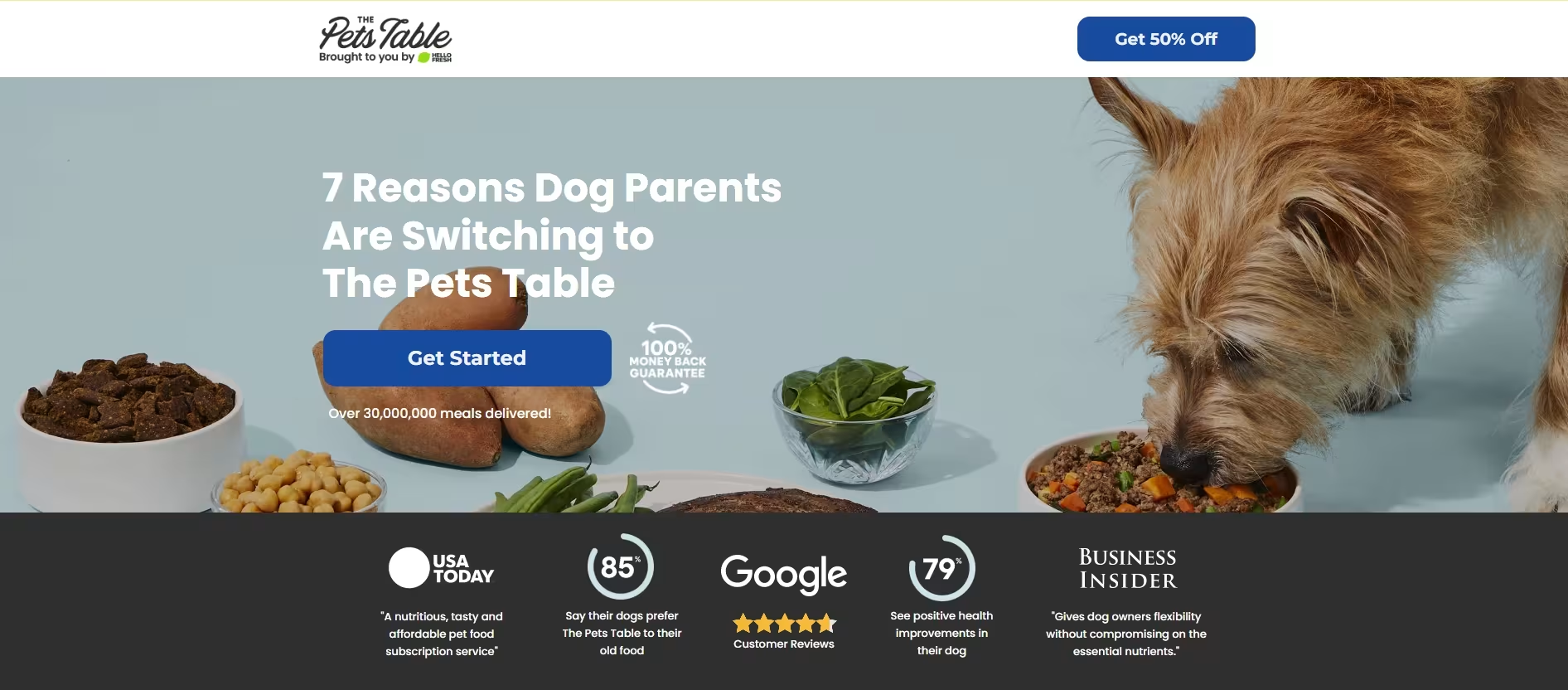
The Pets Table is a personalized dog food delivery service backed by HelloFresh, offering both human-grade fresh meals and minimally-processed air-dried options. With 8 subscription recipes formulated by an on-staff Board Certified Vet Nutritionist®, plans are tailored to your dog's age, weight, and activity level. All meals are AAFCO-complete for all life stages, made in the USA, and free of artificial flavors, colors, and fillers - and the air-dried plan is up to 40% more affordable than most fresh competitors, making it one of the more budget-friendly premium options on the market.
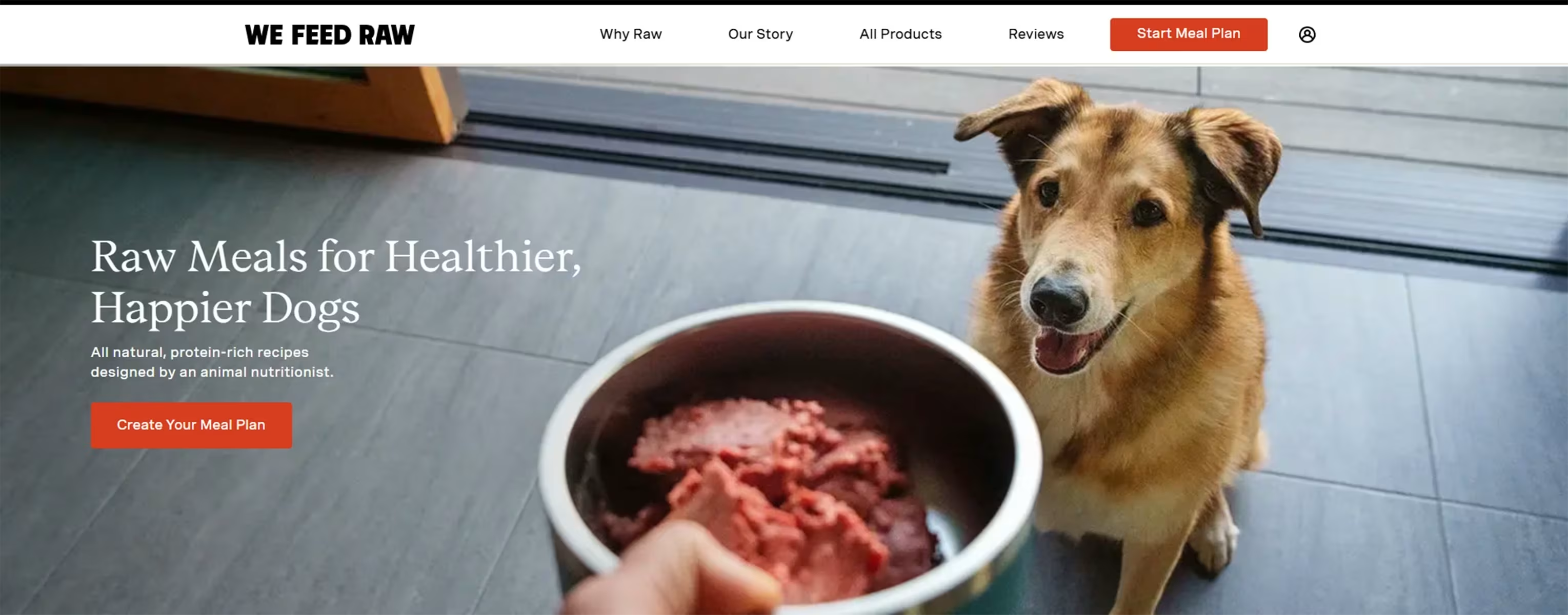
We Feed Raw is a raw dog food delivery service offering PhD-formulated, complete and balanced frozen and freeze-dried raw meals made from high-quality meats. Founded by a family of lifelong dog lovers, the brand delivers 100% raw, minimally processed meals across 5 frozen protein recipes (Beef, Chicken, Turkey, Duck, and Lamb) and 2 freeze-dried options (Beef and Chicken). All recipes meet or exceed AAFCO standards, contain no fillers, grains, or artificial additives, and are made in the USA. Meals are cold-shipped for free with dry ice and eco-friendly packaging, and the brand uses HPP (high-pressure processing) for food safety without compromising nutritional integrity.
The Farmer's Dog is a leading fresh dog food delivery service that delivers gently cooked, human-grade meals straight to your door. Every recipe is formulated by on-staff Board-Certified Veterinary Nutritionists®, made in USDA-inspected facilities, and pre-portioned to your dog's specific calorie needs. Plans start at around $2/day with free shipping, and the brand currently offers 60% off the first box plus a free welcome kit - making it easy and low-risk to give your dog higher-quality food.

Just Food For Dogs is a standout in the fresh pet food space, distinguished by its science-backed approach and commitment to transparency. Unlike many competitors, Just Food For Dogs operates open-to-the-public kitchens where their human-grade meals are prepared. Every recipe is formulated by a team of veterinarians, including board-certified veterinary nutritionists and toxicologists, and is backed by independent, peer-reviewed university feeding trials. With a wide range of options which include frozen fresh, shelf-stable "Pantry Fresh," and even specialty diets for specific health needs—they offer a level of variety and clinical support that is hard to find elsewhere. Their food is made with whole, human-grade ingredients, ensuring high digestibility and quality you can see

Fresh dog food is made from whole, minimally processed ingredients – real meat, vegetables, and grains – cooked in small batches and delivered refrigerated or frozen directly to your home. Unlike traditional kibble, fresh meals are not shelf-stable and contain no artificial preservatives, fillers, or rendered by-products.
Brands like The Farmer’s Dog, Ollie, and We Feed Raw prepare their recipes in USDA-inspected kitchens that meet human-food manufacturing standards, which is why you’ll see the term “human-grade” on their packaging. Meals are pre-portioned based on your dog’s profile and shipped on a recurring delivery schedule you can adjust anytime.
The category has grown rapidly over the past few years as pet owners look for alternatives to heavily processed kibble. But not all fresh dog food services are the same – they differ in ingredient sourcing, recipe formulation, pricing, and how they handle customization. Our comparison table above includes services like Spot & Tango, A Pup Above, and others so you can evaluate them side by side.
Every fresh dog food delivery service on this page is assessed using the same criteria, tailored specifically to what matters in the fresh food category:
• Ingredient Sourcing & Quality – Where are the proteins, vegetables, and grains sourced? Are ingredients USDA-certified? Does the food genuinely meet human-grade standards, or is the claim used loosely?
• Recipe Formulation – Are recipes developed or reviewed by board-certified veterinary nutritionists? Do they meet AAFCO standards for complete and balanced nutrition across relevant life stages?
• Customization & Variety – How well does the service adapt to your dog’s breed, size, age, activity level, and health conditions? How many recipes are available, and can you mix or rotate them?
• Cost Per Day – We calculate the real daily cost for small, medium, and large dogs based on standard subscription pricing – not just the discounted introductory rate.
• Delivery & Packaging – U.S. shipping coverage, delivery frequency options, cold-chain packaging quality, and how easy it is to pause, skip, or cancel without penalty.
• Customer Experience – Palatability feedback, digestive transition reports, customer support responsiveness, and satisfaction trends from independent review sources.
Each brand’s overall score determines its ranking in the table above. We update our assessments regularly as brands change their menus, sourcing, pricing, or policies.
We update our evaluations regularly as brands change their menus, pricing, or policies.
Both brands sell the same basic promise: vet-formulated, human-grade meals cooked in USDA facilities, portioned to your dog and shipped frozen. The difference is what they pair the fresh food with — and what that does to your bill.
Ollie is the stronger menu. It runs five fresh recipes — beef, chicken, turkey, lamb and pork — plus two baked formulas, so you can rotate proteins for a fussy dog. Pet’s Table fields fresh recipes like Chicken Casserole with Green Beans and Beef Stew with Carrots, alongside an air-dried line including Chicken & Sweet Potato and Beef & Berries.
Each brand offers four routes: full fresh, half fresh, a mixed fresh/dry bowl, and a dry-only option.
Ollie is cheaper at the entry point. Fully fresh meals start around $1.57, and the half-fresh plan from $1, with mixed plans from roughly $1.36 a meal. Pet’s Table fresh starts nearer $2.70 a meal for a 25-pound dog, with air-dried from $1.59.
Real-world totals narrow the gap. One long-term reviewer feeding two Klee Kai paid $273.60 a month for Pet’s Table fresh versus $219.60 for Ollie — but Pet’s Table’s air-dried plan came in at $193.20, the cheapest fresh-adjacent option of the two.
Pet’s Table’s air-dried food is shelf-stable, so no freezer Tetris and no 24-hour thaw. Its weak spot is transparency: sourcing detail stays high-level and feeding trials aren’t documented, and a shared production facility makes it a poor fit for dogs with serious allergies.
Choose Ollie for protein variety and the lowest fresh-plan entry price. Choose Pet’s Table if you want fresh-quality nutrition without freezer space — its air-dried tier is the budget winner.
Fresh dog food can benefit any healthy dog, but certain situations make it particularly worth considering:
• Dogs with allergies or food sensitivities – Fresh meals use simple, identifiable ingredients without artificial additives, making it easier to isolate and avoid triggers. Services like The Farmer’s Dog and Ollie let you select recipes that avoid specific proteins.
• Picky eaters – The taste and texture of fresh food is significantly more appealing than kibble for most dogs. Many owners report their dog eating more consistently after switching.
• Dogs with digestive issues – Higher digestibility and fewer processed fillers can help reduce gas, loose stools, and stomach sensitivity.
• Puppies and senior dogs – Fresh food makes it easier to provide precise nutrition tailored to life-stage requirements, with softer textures that suit developing or aging teeth. Just Food For Dogs and Spot & Tango both offer formulas designed for different life stages.
• Overweight dogs – Pre-portioned meals take the guesswork out of calorie control, which is harder to manage with free-feeding kibble.
Other brands in our comparison, including A Pup Above, Raised Right, and The Honest Kitchen, offer their own take on fresh and minimally processed recipes – each with different approaches to cooking methods, ingredient sourcing, and pricing. Check the table above to see how they compare.
That said, fresh food isn’t the right fit for every household. If budget is a primary concern or your dog thrives on a high-quality kibble, there’s no reason to switch just for the sake of it.
Not all fresh dog food brands are created equal. Here are the key things to check before committing to a subscription:
• Veterinary nutritionist involvement – Recipes should be formulated or reviewed by a board-certified veterinary nutritionist (DACVN), not just a general veterinarian or in-house team.
• AAFCO compliance – The food should meet AAFCO standards for complete and balanced nutrition. This should be clearly stated on the packaging or website – if it’s not, that’s a red flag.
• Transparent ingredient sourcing – Look for brands that disclose where their proteins, grains, and produce come from. Vague claims like “premium ingredients” without specifics don’t mean much.
• Realistic customization – Good services adjust portions and recipes based on your dog’s weight, breed, age, and activity level – not just one generic meal plan for all sizes.
• Flexible subscription terms – You should be able to pause, skip, or cancel without fees or penalties. Avoid services that lock you into long-term commitments.
Our comparison table evaluates each brand against these criteria so you don’t have to research them one by one.
The price of fresh dog food depends on your dog’s size, the brand, and whether you’re on a full or partial fresh-feeding plan. Here’s a general breakdown:
• Small dogs (under 20 lbs): $2 – $5 per day
• Medium dogs (20–50 lbs): $4 – $9 per day
• Large dogs (50–80 lbs): $7 – $14 per day
• Extra-large dogs (80+ lbs): $10 – $20+ per day
Many owners reduce costs by using fresh food as a topper or mixer alongside dry food rather than going 100% fresh. Most services support this as a “half-plan” option at roughly half the price. First-order discounts of 50–70% are standard across the category, so it’s easy to trial a service before committing to full price.
Switching your dog’s diet too abruptly can cause digestive upset. Most veterinarians and fresh food brands recommend a gradual transition over 7 to 10 days:
• Days 1–3: 25% fresh food, 75% current food
• Days 4–6: 50% fresh food, 50% current food
• Days 7–9: 75% fresh food, 25% current food
• Day 10+: 100% fresh food
Some dogs with sensitive stomachs may need a slower transition – up to two weeks. Loose stools during the first few days are normal and usually resolve as the digestive system adjusts. If symptoms persist beyond a week, consult your veterinarian.
Advertiser Disclosure: MyPawDelivery is an independent, free comparison resource dedicated to helping pet owners choose the right nutrition for their dogs and cats. To keep our website free for users, we receive advertising compensation from the pet food providers featured on this page. This commercial relationship may impact the order, placement, and sometimes the score of the brands presented in our comparison table. Our rankings are determined by a combination of our team’s assessment, customer feedback, and these affiliate agreements. Please note that we do not list every pet food service available on the market. The inclusion of a brand on this site does not constitute a strict endorsement, and all prices and details are subject to change.
